Moving From Training to Enabling in Today’s Hospitality Industry
Equipping your team with the autonomy and resources they need to thrive
A familiar pattern is playing out across many hospitality businesses right now. We want stronger leadership. More consistent service. Better retention. Teams that can adapt as expectations shift. Yet when pressure builds, we often return to what feels visible and reassuring. Programmes. Workshops. Content. It is well-intentioned, but it is not always what makes the difference.
In my current role, working within a global Policies and Practices Centre of Excellence, I see this dynamic across different regions and operating environments. The intent is there. The commitment to people is there. The challenge is how consistently that intent translates into everyday practice, particularly in environments where pace, pressure, and operational demands are constant.
The Bigger Shift Behind This Issue
Development functions are at their most effective when they act as engines of adaptation, helping organisations build capability that supports execution, not just activity. That distinction matters. Because in hospitality, performance is not shaped in a classroom. It is shaped by the flow of work. In guest interactions. In team briefings. In how managers respond under pressure. In the small decisions that happen hundreds of times a day.
What we are seeing more clearly now is that development becomes more effective when it starts with the business question, not the training response.
The Real Impact on Hospitality Teams
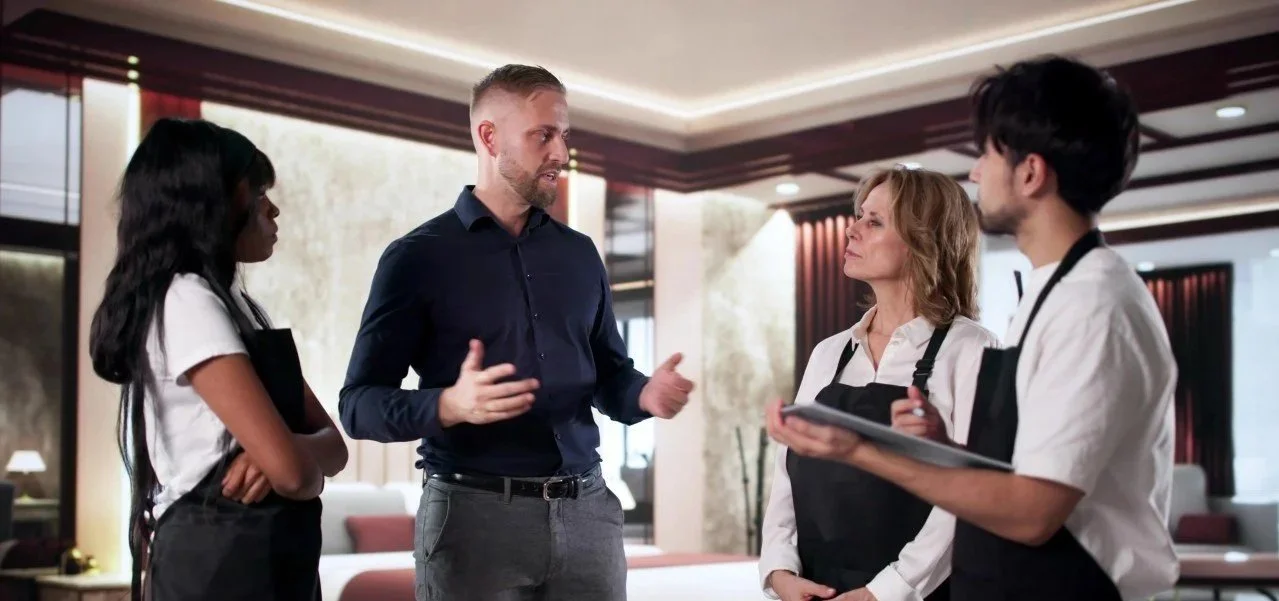
One theme that stands out strongly is proximity. Development creates the most value when it is close to the people who own outcomes. Close enough to understand what the business is trying to achieve. Close enough to see where things are working, and where they are not. Close enough to speak the language of operations, not just the language of HR.
In hospitality, that proximity is not optional. The realities of the work are visible and immediate. Service gaps appear quickly. Pressure builds quickly. Good leadership is felt straight away, and so is its absence. This is not about repositioning HR above the business. It is about working alongside it, in partnership with leaders, to make change land more consistently.
Where Many Hospitality Businesses Struggle
Perhaps the biggest hurdle is the reliance on content as the default response. In busy hospitality environments, performance rarely improves with information alone. Many L&D and HR teams feel only partially ready to turn evidence into action, facing barriers like access to decision-makers, usable data, and the time to experiment.
We often have the data: guest feedback, retention figures, absence trends, internal promotion rates, and commercial performance. What is sometimes less clear is how deliberately we connect people's initiatives to those outcomes. Instead of building capability within the workflow itself, activity absorbs capacity without actually shifting outcomes.
What HR Must Get Right
To move from learning activity to performance support, HR leaders must focus on practical, operational priorities.
Focus on Outcomes Over Activity
Conversations create far more impact when they replace asking "what course should be delivered next" with asking:
What outcomes matter most right now?
Where is performance under strain?
Which roles will make the biggest difference?
What behaviour needs to shift for this to work?
Performance Support Beyond Content
Performance improves when the conditions around the work make the right actions easier. In practice, this means less emphasis on standalone training. A well-designed job aid can outperform a workshop. A strong one-to-one rhythm can shift behaviour more effectively than a programme. A confident line manager can influence culture more than any piece of content. Technology and AI should be used to support judgement and reduce administrative burden, creating more space for human empathy and presence.
Visibility of Impact
Impact becomes more credible when it is visible in terms that the business understands. This does not require complex dashboards; it requires clarity early on:
What are we trying to influence?
What would progress look like in business terms?
What would give leaders confidence that this is working?
Why Hospitality Has More at Stake Than It Thinks
Capacity is not unlimited. Priorities compete. Requests continue. In that context, effective HR teams must be intentional about where they focus their energy. Hospitality businesses depend heavily on agile service and immediate problem-solving. If HR teams continue to run interventions that are difficult to connect to performance, they risk looking disconnected from the operational reality. Work that exists merely because it is familiar wastes resources that should be spent on genuinely enabling teams to meet shifting guest expectations.
The Strategic Opportunity for HR Leaders
Progress rarely comes from large-scale transformation. More often, it comes from small, deliberate shifts applied consistently. HR has the opportunity to act as a true operational stabiliser by keeping work closely aligned to business outcomes and shaping it in partnership with leaders.
A practical way to approach this is to agree on which outcomes matter most this quarter, clarify what success looks like, support that improvement in the flow of work, and track a small number of meaningful indicators. In global organisations, this relies on shared standards and well-governed practices that allow good work to scale.
In a Nutshell
What has changed: There is a necessary shift away from traditional, content-heavy training toward embedded performance enablement.
Why it matters: In hospitality, capability is built in the flow of work, not in isolation.
What happens if leaders ignore it: HR risks wasting capacity on familiar but ineffective programs that fail to translate into everyday practice or commercial results.
What improves when they act early: Development stops being a separate initiative and becomes a consistent, integrated driver of how the organisation succeeds.
Key Takeaways for Hospitality HR Leaders
This issue is a strategic signal, not a short-term disruption.
People processes directly affect retention and service quality.
Development must stay close to operations and speak the language of the business.
Hospitality leaders who plan early gain a lasting advantage.
Stay Ahead in Hospitality HR
HR Horizons delivers weekly, practical insights for leaders in hotels, restaurants, and hospitality groups.
If you want stronger teams and more resilient workplaces, subscribe and join a growing community shaping the future of hospitality.